
ANXIETY
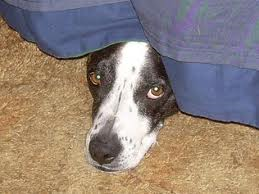
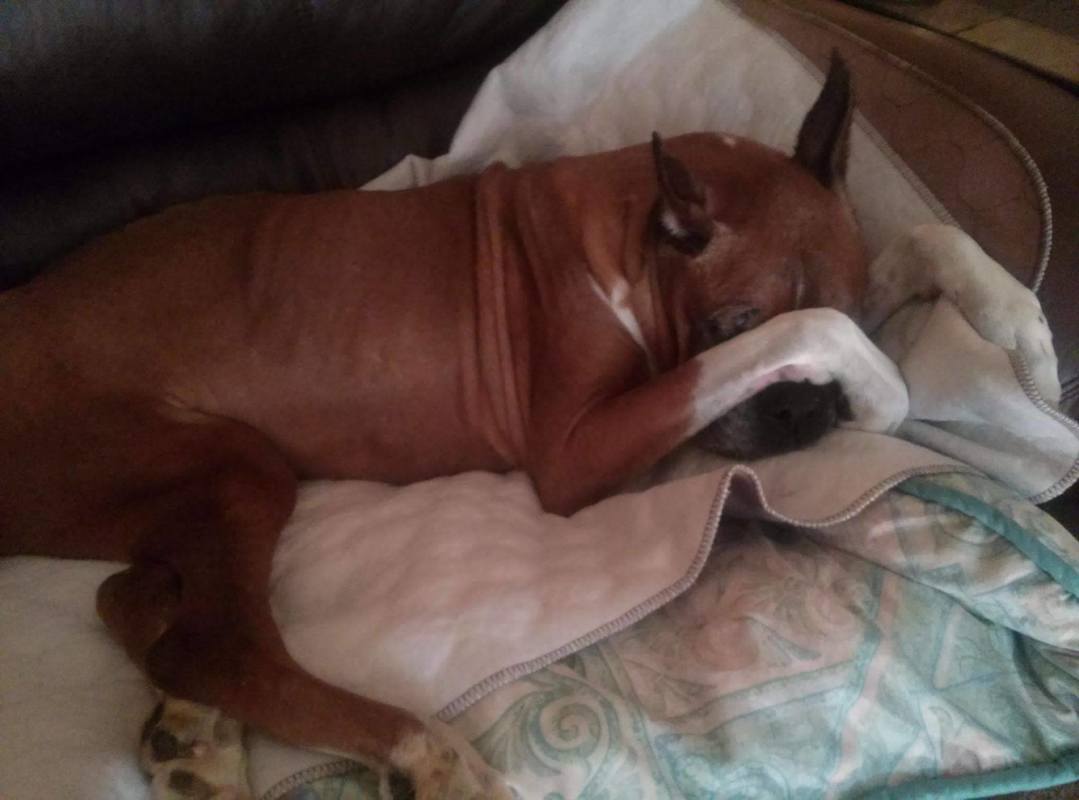
I just read an amazingly perceptive article from my friend Reisa Stone, an friend and Animal Communicator from Vancouver, about her observations regarding how horses behave at horse shows. She observed a lot of anxiety and offered some wonderful advice based on what is actually going on amongst the horses at shows relative to herd mentality.
It got me thinking about all of my experiences over the decades at conformation and performance shows for dogs, the conversations that I have with my own dogs, and some I have had with client dogs in competition. (For those who don't know, I'm also a telepathic Animal Communicator). For those of us who are showing in conformation and performance, as I do, we often find ourselves dealing with dogs who are suddenly anxious, overheated, and over-amped. They sometimes lunge unexpectedly at other dogs, when we’ve not seen that behavior in our home environment. They often get diarrhea, skin rashes, or other illnesses and we have to consider pulling them from competition. Sometimes they slink away from a particular judge, run around with their tails down, or generally act fearful. So how do we help them?
In my capacity as an Animal Communicator, I’ve been contacted by clients with show dogs who want me to check in and see if I can “fix” these behaviors in their show dogs, and I can sympathize because I’ve had my share of these issues in my own dogs over the years as well. These are not always easy to fix, but some of these experiences may help you to understand how you can help your own dog. You may also see how communicating with your animal can fit in to helping them to enjoy the experience along with you.
The first time I walked into the Reliant World of Dog Shows as a professional Animal Communicator, I was with a friend who was newly practicing her telepathic skills with dogs. When we entered the building, there were several thousand dogs present on the site. I could feel the anxious energy immediately, and my friend, who didn’t have adequate filters set up for such an event, nearly collapsed once we walked in the exhibitor’s entrance. I thought she was going to need an ambulance; she covered her ears and said “Oh my God, don’t you hear them all?” What she was hearing were the telepathic communications of dogs all over the building, talking to one another, looking for help, wondering where their people were, etc.; basically it sounded like an elementary schoolroom without a teacher and the students were running amok! It was deafening to her and it nearly incapacitated her.
I realized at the time that many of the dogs needed help and didn’t have anyone to talk to, and when she walked in, her telepathic “third eye” was like a beacon light in their world. They knew we were there and they all wanted to talk at once. It was literal pandemonium in her head; a cacophony of voices all screaming to be heard over the others. No wonder she was collapsing!
I have been taught how to “filter” one animal from another, so my communications are always directed at a specific animal. I am very rarely contacted by an animal “out of the blue”, though it does happen occasionally. That’s for another blog. However, when you realize that dogs at shows are not only bombarded with the noises, smells and sights of hundreds, if not thousands of other dogs and people, along with the telepathic voices of those animals, it makes sense that there is anxiety in the air. As well, most of these dogs are very good at reading the energy of their people, so they pick up on human anxiety and stress and bring it into their own bodies.
Consider this – there was an experienced performance agility dog who was “missing obstacles” (taking them out of the proper sequence), and the trainer wanted to know why this was happening so much. The telepathic communication by my mentor revealed that the trainer was so focused on the sequence of the obstacle course that she was thinking about the next two obstacles prior to the one the dog was on. The dog was picking up on this as a telepathic visualization, and was so incredibly connected to her trainer that she was paying more attention to the telepathic instructions than to the physical cues that were being given. Therefore, when the trainer thought about the dog walk (which was two obstacles ahead), the dog said “got it!” and ran to the dog walk instead of the tunnel which
was supposed to be next. Once the trainer understood that it was important to keep her thoughts directed at the current obstacle, the problem disappeared. The dog followed the physical cues and received her “mental” instructions at the same time. Problem solved.
This story illustrates how very connected our dogs are to our own emotions and thoughts. Every thought has an impact; a life of its own. And thoughts can communicate very real intentions to our dogs. If we are anxious and worried about how we will do in the ring, the dog certainly picks up on it. In Reisa’s article, she talks about how the horses are so affected by the disruption of herd mentality and energies when they are put into show situations. Dogs don’t have a herd mentality; they have a pack mentality. And they pay attention to the thoughts and emotions of their pack leader. However, at a dog show, that pack mentality is disrupted and the dog can lose track of the purpose of being there and become fearful and lonely because he/she has lost the sense of connection with their pack leader – you.
As another example, I talked with a working breed dog that was consistently being aggressive in the ring. His person wanted me to “get it under control” if possible. When I connected with this dog, his entire energy body was filled with fear and anxiety, and the dog was not at the show during the session. When I asked him what was happening in the shows, he showed me in detail, and told me that he hated being there. He begged me to tell his owner that this was not supposed to be his job. In his mind, aggression was the only way to get the message across. I passed this along to his owner, who was pretty insistent that he needed to do this job. He was a promising show dog and she wanted him to do well and win. So I ended up having a long talk with him, explaining why he was being asked to do this job, what it entailed, and showing him in pictures and videos how she expected him to behave. His energy calmed and he became pensive and quiet for a bit after I explained all of this to him. I don’t think he really understood why he was put into shows, so it took some time to make sense to him. He was very bitter about being thrust into show situations without being asked if he wanted to be there. He then asked for something in return. He said “if I do this, could you ask her to play ball with me? She doesn’t play with me and I need that from her.” She agreed, and the next weekend he was pretty much an angel in the show ring, according to observers. I will say this – if you make a promise to an
animal – FOLLOW THROUGH. Animals are like children – they don’t understand when you make a promise and don’t follow through. It creates distrust. (Note that this dog would have benefited from receiving a flower essence called Star of Bethlehem, which helps with overcoming past hurts, which this dog felt in spades. He also could have used Willow, which helps with resentment.)
Along with our usual training methodologies, we all need to add a component of communication for our animals to reassure them of their purpose, their job, and our expectations. I often do this with my own dogs. I have one who easily becomes disconnected from me when he is at the shows and exhibits fearful behaviors. This happens most when I forget to talk to him prior to getting to the show grounds. Anyone can do this; you don’t need to be telepathic to effectively communicate with animals if you follow three simple steps:
1) Say what you want out loud directly to the animal. Don’t worry if they’re not looking at you. It doesn't mean they don't hear you.
2) Mentally visualize what that looks like to them. Animals like to see pictures and videos, so picture what you see them doing in the ring – acting calm, confident and self-assured.
3) Communicate using a positive tone. Nobody likes to be talked down to or threatened, so tell your dog what you want using positive words and pictures. Don’t start out by telling them what “not to do”. Show them instead what you expect using mental videos of them acting like rock stars and enjoying the experience. Thank them IN ADVANCE for what they are going to do for you. After all, YOU’RE the one who are putting them in the ring, right?
I will give you similar advice to Reisa Stone’s guidance:
1) Talk to your dog BEFORE you to the show. Explain what will be happening and what you expect from them. Talk in terms of behaviors, not in terms of wins. (My dog can show me if he’s won a ribbon, but he apparently can’t see colors. He gets very excited when he shows me the ribbon being handed to the handler. I can’t tell if it’s the color I’m hoping for; I just tell him what a great win it is. So don’t pressure them to get points or qualifying scores – just show them performing at their absolute best and tell them you will be proud of them no matter what happens!)
2) Take a few minutes to breathe, calm and ground yourself when you get to the show grounds. Your dog feels your energy, so give him/her the calmest and most positive energy possible.
3) Use one of the following essential oils from Young Living. Dilute 4 parts carrier oil to 1 part EO and apply down spine and to ear tips before leaving.
Peace and Calming or Peace and Calming II
Stress Away
Lavender (for milder situations)
4) Consider using flower essences before the show if you have a dog that has predictable anxiety.
Mimulus and Aspen are great for fear of the unknown.
Aspen helps with vague or unaccountable fears, providing a sense of security and fearlessness so they
may face challenges and difficulties more easily.
Agrimony is great for sensitivity to disturbances and disharmony.
Beech is really nice for dogs that are intolerant of others in their space.
Centaury helps restore assertiveness and confidence.
Larch boosts self-esteem, confidence and determination.
Chestnut Bud is particularly good for dogs that have trouble learning from their mistakes and tend to have to
learn the same lesson repeatedly.
Rock Rose is also good for fear, but more in situations of abject terror and extreme fear.
Vervain assists high strung animals to be determined and not domineering.
Vine is great for dogs that are over-assertive and like to dominate others.
There are also some wonderful flower essences that help with dogs that are depressed, lethargic, unfocused, needy, jealous or uninterested. We will cover them in another article.
For those who are interested in using natural, homeopathic supports for performance anxiety, consider giving your dog
Gelsemium sempervirens prior to showing. The dry pellets can be dropped directly into the patient's mouth. If the situation does not allow for that or you are not comfortable with a dry dosing method, simply drop one to three pellets into a volume of water (the exact amount isn't that important.) Stir or shake well. The pellets may or may not dissolve, depending on the hardness of the pellet, but this doesn't matter as long as the solution is stirred or shaken well. Dose the patient by placing some (1 or 2 drops, teaspoons or fractions of teaspoons) of the solution on the dog's nose near the nostrils or directly into the mouth. The exact volume isn't that important. The goal is to use adequate volume to ensure good contact with the patient's mucous membranes. (The potency - 6C, 30C or 200C - is fairly forgiving in acute crisis situations, so just use the potency you have available and watch the dog for any changes and redose when the remedy action wanes or ceases. Redosing may be in 5 minutes, 15 minutes, 1 hour - or whenever needed. You cannot really overdose.
You may find that one remedy or flower essences works better than another, but usually when you find the right one, it's like a little miracle. So don't give up.
I want to thank Reisa Stone for inspiring this article and offering tremendous insight to those who breed and show horses as well as other animal species. If you would like to read her article, you will find it at www.reisastone.com. Or click on this link to be sent to her article entitled “Minimize Your Companion’s Anxiety”.
It got me thinking about all of my experiences over the decades at conformation and performance shows for dogs, the conversations that I have with my own dogs, and some I have had with client dogs in competition. (For those who don't know, I'm also a telepathic Animal Communicator). For those of us who are showing in conformation and performance, as I do, we often find ourselves dealing with dogs who are suddenly anxious, overheated, and over-amped. They sometimes lunge unexpectedly at other dogs, when we’ve not seen that behavior in our home environment. They often get diarrhea, skin rashes, or other illnesses and we have to consider pulling them from competition. Sometimes they slink away from a particular judge, run around with their tails down, or generally act fearful. So how do we help them?
In my capacity as an Animal Communicator, I’ve been contacted by clients with show dogs who want me to check in and see if I can “fix” these behaviors in their show dogs, and I can sympathize because I’ve had my share of these issues in my own dogs over the years as well. These are not always easy to fix, but some of these experiences may help you to understand how you can help your own dog. You may also see how communicating with your animal can fit in to helping them to enjoy the experience along with you.
The first time I walked into the Reliant World of Dog Shows as a professional Animal Communicator, I was with a friend who was newly practicing her telepathic skills with dogs. When we entered the building, there were several thousand dogs present on the site. I could feel the anxious energy immediately, and my friend, who didn’t have adequate filters set up for such an event, nearly collapsed once we walked in the exhibitor’s entrance. I thought she was going to need an ambulance; she covered her ears and said “Oh my God, don’t you hear them all?” What she was hearing were the telepathic communications of dogs all over the building, talking to one another, looking for help, wondering where their people were, etc.; basically it sounded like an elementary schoolroom without a teacher and the students were running amok! It was deafening to her and it nearly incapacitated her.
I realized at the time that many of the dogs needed help and didn’t have anyone to talk to, and when she walked in, her telepathic “third eye” was like a beacon light in their world. They knew we were there and they all wanted to talk at once. It was literal pandemonium in her head; a cacophony of voices all screaming to be heard over the others. No wonder she was collapsing!
I have been taught how to “filter” one animal from another, so my communications are always directed at a specific animal. I am very rarely contacted by an animal “out of the blue”, though it does happen occasionally. That’s for another blog. However, when you realize that dogs at shows are not only bombarded with the noises, smells and sights of hundreds, if not thousands of other dogs and people, along with the telepathic voices of those animals, it makes sense that there is anxiety in the air. As well, most of these dogs are very good at reading the energy of their people, so they pick up on human anxiety and stress and bring it into their own bodies.
Consider this – there was an experienced performance agility dog who was “missing obstacles” (taking them out of the proper sequence), and the trainer wanted to know why this was happening so much. The telepathic communication by my mentor revealed that the trainer was so focused on the sequence of the obstacle course that she was thinking about the next two obstacles prior to the one the dog was on. The dog was picking up on this as a telepathic visualization, and was so incredibly connected to her trainer that she was paying more attention to the telepathic instructions than to the physical cues that were being given. Therefore, when the trainer thought about the dog walk (which was two obstacles ahead), the dog said “got it!” and ran to the dog walk instead of the tunnel which
was supposed to be next. Once the trainer understood that it was important to keep her thoughts directed at the current obstacle, the problem disappeared. The dog followed the physical cues and received her “mental” instructions at the same time. Problem solved.
This story illustrates how very connected our dogs are to our own emotions and thoughts. Every thought has an impact; a life of its own. And thoughts can communicate very real intentions to our dogs. If we are anxious and worried about how we will do in the ring, the dog certainly picks up on it. In Reisa’s article, she talks about how the horses are so affected by the disruption of herd mentality and energies when they are put into show situations. Dogs don’t have a herd mentality; they have a pack mentality. And they pay attention to the thoughts and emotions of their pack leader. However, at a dog show, that pack mentality is disrupted and the dog can lose track of the purpose of being there and become fearful and lonely because he/she has lost the sense of connection with their pack leader – you.
As another example, I talked with a working breed dog that was consistently being aggressive in the ring. His person wanted me to “get it under control” if possible. When I connected with this dog, his entire energy body was filled with fear and anxiety, and the dog was not at the show during the session. When I asked him what was happening in the shows, he showed me in detail, and told me that he hated being there. He begged me to tell his owner that this was not supposed to be his job. In his mind, aggression was the only way to get the message across. I passed this along to his owner, who was pretty insistent that he needed to do this job. He was a promising show dog and she wanted him to do well and win. So I ended up having a long talk with him, explaining why he was being asked to do this job, what it entailed, and showing him in pictures and videos how she expected him to behave. His energy calmed and he became pensive and quiet for a bit after I explained all of this to him. I don’t think he really understood why he was put into shows, so it took some time to make sense to him. He was very bitter about being thrust into show situations without being asked if he wanted to be there. He then asked for something in return. He said “if I do this, could you ask her to play ball with me? She doesn’t play with me and I need that from her.” She agreed, and the next weekend he was pretty much an angel in the show ring, according to observers. I will say this – if you make a promise to an
animal – FOLLOW THROUGH. Animals are like children – they don’t understand when you make a promise and don’t follow through. It creates distrust. (Note that this dog would have benefited from receiving a flower essence called Star of Bethlehem, which helps with overcoming past hurts, which this dog felt in spades. He also could have used Willow, which helps with resentment.)
Along with our usual training methodologies, we all need to add a component of communication for our animals to reassure them of their purpose, their job, and our expectations. I often do this with my own dogs. I have one who easily becomes disconnected from me when he is at the shows and exhibits fearful behaviors. This happens most when I forget to talk to him prior to getting to the show grounds. Anyone can do this; you don’t need to be telepathic to effectively communicate with animals if you follow three simple steps:
1) Say what you want out loud directly to the animal. Don’t worry if they’re not looking at you. It doesn't mean they don't hear you.
2) Mentally visualize what that looks like to them. Animals like to see pictures and videos, so picture what you see them doing in the ring – acting calm, confident and self-assured.
3) Communicate using a positive tone. Nobody likes to be talked down to or threatened, so tell your dog what you want using positive words and pictures. Don’t start out by telling them what “not to do”. Show them instead what you expect using mental videos of them acting like rock stars and enjoying the experience. Thank them IN ADVANCE for what they are going to do for you. After all, YOU’RE the one who are putting them in the ring, right?
I will give you similar advice to Reisa Stone’s guidance:
1) Talk to your dog BEFORE you to the show. Explain what will be happening and what you expect from them. Talk in terms of behaviors, not in terms of wins. (My dog can show me if he’s won a ribbon, but he apparently can’t see colors. He gets very excited when he shows me the ribbon being handed to the handler. I can’t tell if it’s the color I’m hoping for; I just tell him what a great win it is. So don’t pressure them to get points or qualifying scores – just show them performing at their absolute best and tell them you will be proud of them no matter what happens!)
2) Take a few minutes to breathe, calm and ground yourself when you get to the show grounds. Your dog feels your energy, so give him/her the calmest and most positive energy possible.
3) Use one of the following essential oils from Young Living. Dilute 4 parts carrier oil to 1 part EO and apply down spine and to ear tips before leaving.
Peace and Calming or Peace and Calming II
Stress Away
Lavender (for milder situations)
4) Consider using flower essences before the show if you have a dog that has predictable anxiety.
Mimulus and Aspen are great for fear of the unknown.
Aspen helps with vague or unaccountable fears, providing a sense of security and fearlessness so they
may face challenges and difficulties more easily.
Agrimony is great for sensitivity to disturbances and disharmony.
Beech is really nice for dogs that are intolerant of others in their space.
Centaury helps restore assertiveness and confidence.
Larch boosts self-esteem, confidence and determination.
Chestnut Bud is particularly good for dogs that have trouble learning from their mistakes and tend to have to
learn the same lesson repeatedly.
Rock Rose is also good for fear, but more in situations of abject terror and extreme fear.
Vervain assists high strung animals to be determined and not domineering.
Vine is great for dogs that are over-assertive and like to dominate others.
There are also some wonderful flower essences that help with dogs that are depressed, lethargic, unfocused, needy, jealous or uninterested. We will cover them in another article.
For those who are interested in using natural, homeopathic supports for performance anxiety, consider giving your dog
Gelsemium sempervirens prior to showing. The dry pellets can be dropped directly into the patient's mouth. If the situation does not allow for that or you are not comfortable with a dry dosing method, simply drop one to three pellets into a volume of water (the exact amount isn't that important.) Stir or shake well. The pellets may or may not dissolve, depending on the hardness of the pellet, but this doesn't matter as long as the solution is stirred or shaken well. Dose the patient by placing some (1 or 2 drops, teaspoons or fractions of teaspoons) of the solution on the dog's nose near the nostrils or directly into the mouth. The exact volume isn't that important. The goal is to use adequate volume to ensure good contact with the patient's mucous membranes. (The potency - 6C, 30C or 200C - is fairly forgiving in acute crisis situations, so just use the potency you have available and watch the dog for any changes and redose when the remedy action wanes or ceases. Redosing may be in 5 minutes, 15 minutes, 1 hour - or whenever needed. You cannot really overdose.
You may find that one remedy or flower essences works better than another, but usually when you find the right one, it's like a little miracle. So don't give up.
I want to thank Reisa Stone for inspiring this article and offering tremendous insight to those who breed and show horses as well as other animal species. If you would like to read her article, you will find it at www.reisastone.com. Or click on this link to be sent to her article entitled “Minimize Your Companion’s Anxiety”.
NEW ANXIETY FORMULA PROVES HELPFUL
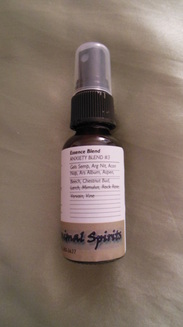
A NEW ANXIETY FORMULA IS NOW AVAILABLE - We have been conducting trials of various combinations of flower essences mixed with homeopathics to test their effectiveness on performance dogs who exhibit various fearful and/or anxious behaviors. We were also fortunate to be able to test these formulas on human volunteers as well.
By researching and consulting higher guidance/intuition, the formula was improved over a period of six months to optimum results. Volunteers charted specific behaviors such as dogs "refusing weaves in agility", people feeling "heart palpitations prior to business presentations", people feeling "panic attacks when driving on strange roads or meeting strangers", dogs "trembling/leaning in the conformation ring when approached by a judge", dogs "shaking/vomiting ringside prior to a performance competition".
We saw an overall improvement in symptoms of at least 60% in fearful and anxious behaviors after using this formula for a month. Trials are still underway and we appreciate feedback from anyone who purchases this formula for their pets or themselves.
This formula includes:
Homeopathics:
Gelsemium sempervirens
Argentum nitricum
Aconitum napellus
Arsenicum album
Flower Essences:
Aspen
Beech
Chestnut
Bud
Larch
Mimulus
Rock
Rose
Vervain
Vine
By researching and consulting higher guidance/intuition, the formula was improved over a period of six months to optimum results. Volunteers charted specific behaviors such as dogs "refusing weaves in agility", people feeling "heart palpitations prior to business presentations", people feeling "panic attacks when driving on strange roads or meeting strangers", dogs "trembling/leaning in the conformation ring when approached by a judge", dogs "shaking/vomiting ringside prior to a performance competition".
We saw an overall improvement in symptoms of at least 60% in fearful and anxious behaviors after using this formula for a month. Trials are still underway and we appreciate feedback from anyone who purchases this formula for their pets or themselves.
This formula includes:
Homeopathics:
Gelsemium sempervirens
Argentum nitricum
Aconitum napellus
Arsenicum album
Flower Essences:
Aspen
Beech
Chestnut
Bud
Larch
Mimulus
Rock
Rose
Vervain
Vine
